Search This Blog

Monday, 12 November 2018

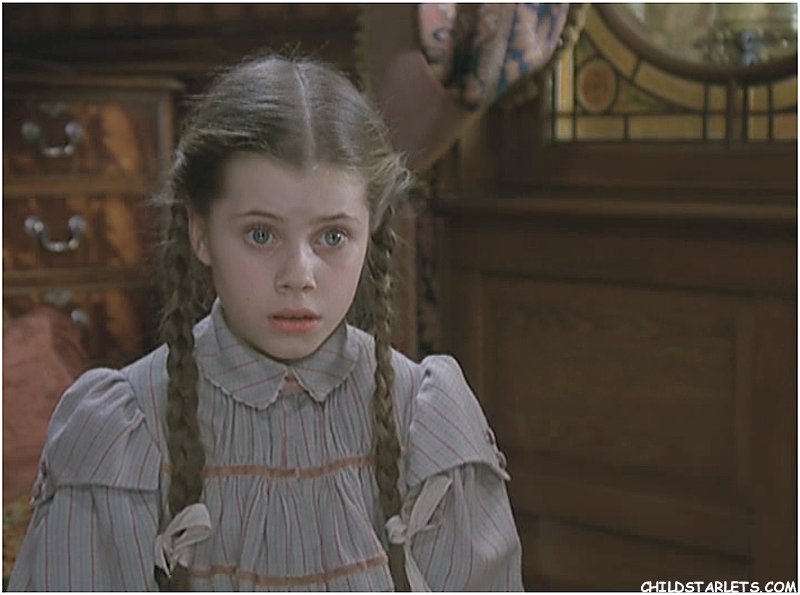
The Symbolism of Return to Oz

Return to Oz is a 1985 dark fantasy film released by The Walt Disney Company, and is heavily regarded as a cult classic, a loyal adaptation of the books by L. Frank Baum, and one of the scariest family films of all time. In some respects, the film is superior to The Wizard of Oz, serving as a spiritual sequel to the 1939 classic.


For this analysis, we shall be taking a look at the symbolic meanings behind the story and imagery of Dorothy Gale’s journey throughout the film. The major psychological symbolism of the film is Dorothy’s decision to choose between reality and fantasy, and the damage she had done to her own mind because of her indecisiveness and lack of judgement. As a sequel to The Wizard of Oz, the film carries over the question whether or not Oz is a real place or just a dream, leading to a lot of mental imprinting from the real world into Dorothy’s imagination and subconsciousness.

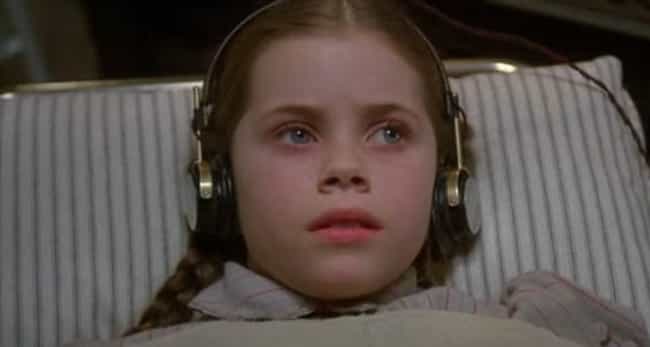
The film opens with Dorothy lying in bed, obsessed with Oz, and has become an insomniac because of her issues. Whether or not Oz is real is immediately brought up, Aunt Em and Uncle Henry dismissing it as a child’s imagination-turned-obsessive fantasy, brought on by Dorothy’s trauma from the tornado. 

Dorothy’s life is not exactly good. Uncle Henry is trying to rebuild the farm whilst in debt and suffering from a limp. Dorothy is aware of this, but remains caught up in her own troubles to help out. Dorothy sees a shooting star pass by her window and assumes it means something good is to come.

Aunt Em decides to take Dorothy to see a therapist, Dr. Worley, who specialises in electroshock therapy. The next day, Dorothy finds a key shaped like the Oz emblem, assuming it was sent by her friends and they are in trouble. She tries to show it to Aunt Em as proof, but her aunt dismisses it as being from the old house and silences Dorothy’s attempts to argue.

They head on out to the clinic, but Toto gives chase, concerned for his master’s welfare. Dorothy scolds her dog and leaves him behind, symbolising the beginnings of her separation from her innocent fantasies, but also her key connection to home. 

 At the clinic, Dorothy tells Dr. Worley about her adventures in Oz. Worley is a charismatic man, but his ambition and reputation are more important to him than the needs of his patients, as revealed later on when it turns out patients are locked in the cellar due to being mentally damaged by the ECT.

Worley asks Dorothy about the Ruby Slippers, which serve as a tie-in to The Wizard of Oz. The slippers represent the link between the conscious and subconscious mind, allowing Dorothy to return to reality and symbolise the power she has over her own mindscape. Dorothy reveals the slippers were lost, implying her understanding between fantasy and reality is mixed and distorted. Worley shows her his ECT machine, which will play a hand in Dorothy’s descent into her psyche, and the basis for Tik-Tok.

Dorothy sees a reflection of a girl in the ECT machine, who we later learn is Princess Ozma. Ozma symbolises Dorothy’s true subconscious self and possibly her conscience. Dorothy is the only character who interacts with Ozma in Kansas, so it is possible that she is not real - though that wouldn’t explain how she got a jack o’lantern.


Aunt Em leaves, and Dorothy is locked in a room by the creepy Nurse Wilson until her operation. Seriously, she gives Nurse Ratched a run for her money! 

Ozma appears, giving Dorothy the jack o’lantern and asks why she was brought to the clinic. Representing Dorothy’s conscience, Dorothy is effectively talking to herself and accepts the knowledge that Oz might just be made up. Ozma’s question also hints to Dorothy that the clinic is dangerous, informing us that Dorothy is subconsciously aware that something is wrong.

Dorothy gets escorted to the operation room to get her brain zapped. Let’s say for the sake of this analysis and theory, Dorothy undergoes the ECT, has a complete dissociation from reality, escapes the clinic, falls into the river, and later washes up on the bank while experiencing her journey into her subconscious. The blackout symbolises Dorothy’s dissociation from reality due to the trauma of the ECT.


Ozma appears and rescues her, revealing the fate of other patients. Dorothy finally realises the clinic is dangerous and flees out into the equally deadly storm with Ozma, pursued by Nurse Wilson. The two girls fall into a river, Dorothy surviving but Ozma drowns. This symbolises Dorothy’s submergence into her mind, and losing her conscience, who would guide her back to reality.


Dorothy wakes up in the Deadly Desert, a vast wasteland where everything that steps into it dies and turns to sand. This represents Dorothy’s inner despair and fear, losing herself in her subconscious, and the loss of her identity caused by the ECT.

She is accompanied by a talking chicken named Billina. Said chicken appeared on Dorothy's farm, so Billina is Dorothy’s sole connection to home and reality, but also a voice of logic and reason, asking questions about Oz and reminding Dorothy of home, and thus reality. Her egg is also significant to the plot, representing new life and hope, later killing the evil Nome King. The two leave the desert and explore Oz. However, the rocks around her are literally watching her and report back to the Nome King, who is Dr. Worley’s counterpart in Oz.


The Nome King represents Dr. Worley’s influence over Dorothy’s mind. Both characters wish to erase all memory and trace of Oz’s existence. Worley is obsessed with the power of his machines, viewing the human brain as a machine which can be influenced and controlled, but his experiments have led to patients being injured and locked away.

The Nome King transforms all of the Ozians into lifeless statues or ornaments, reflecting the need to stamp out all of Dorothy’s imagination and free will. His true goal is to become human, or rather become the controller of a human mind, namely Dorothy’s, replacing her subconscious with his own, representing Dr. Worley’s desire to control the mind through ECT. This also explains why the King is terrified of Princess Ozma getting out, knowing it she would help Dorothy regain her willpower. The Nome King also symbolises Dorothy’s depression, which threatens to consume her from within.


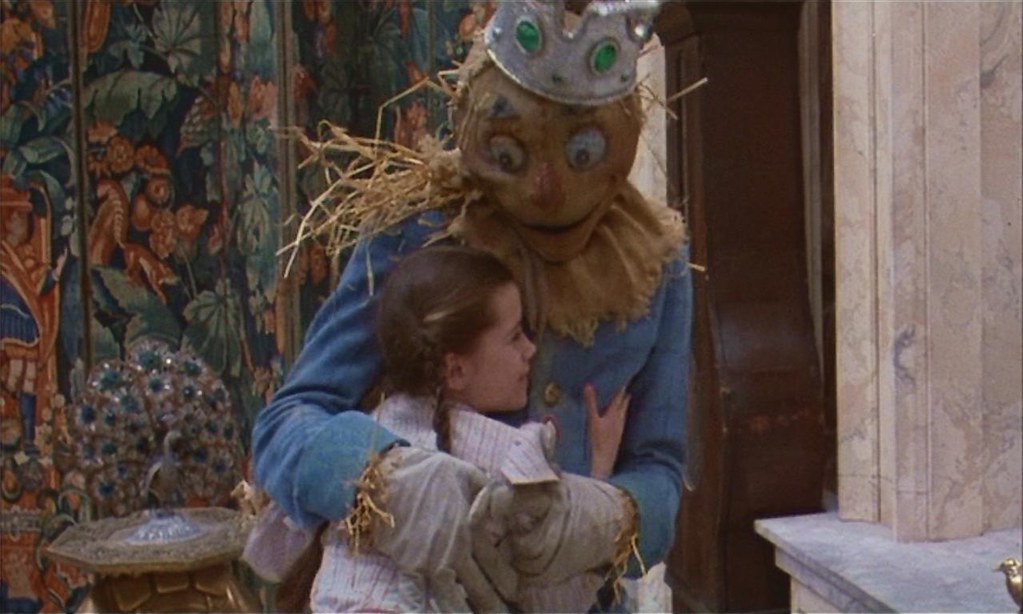
Dorothy travels to the Emerald City where she discovers all of the citizens have been turned to stone. The Tin Man and the Cowardly Lion are amongst the victims, whilst the Scarecrow has been kidnapped by the Nome King. The trio represent wisdom, love, and courage, but they are suppressed by the Nome King’s influence. Scarecrow, in particular, represents Dorothy’s common sense, wisdom, and understanding, but also her physical brain which faces destruction by Dr. Worley’s experiments. The loss of losing one’s mind is symbolised throughout the film.
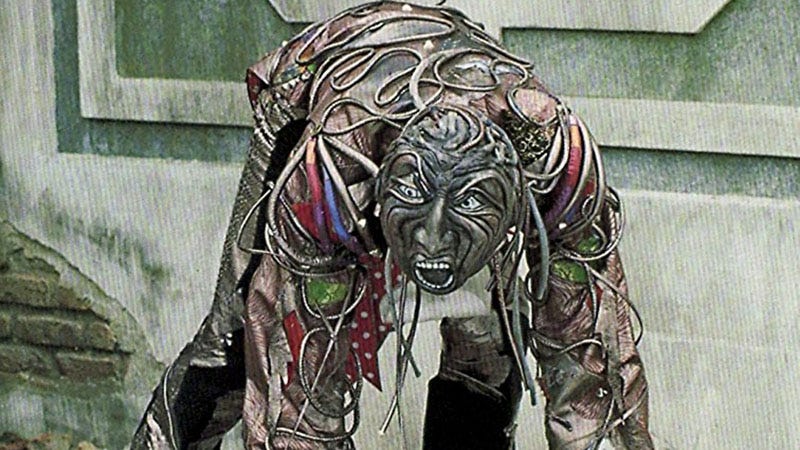


It is at this point in her journey that Dorothy encounters the menacing, psychotic Wheelers. Out of all of the monsters in Return to Oz, they have to be the scariest. They are demonic humans who have wheels for hands and feet. Inspired by the orderlies in the clinic and their squeaky-wheeled stretchers, the Wheelers bring with them chaos, terror, and act as the twisted enforcers of the Nome King’s new laws. The Wheelers chase Dorothy, stating that chickens are banned in Oz - i.e. bringing new life, imagination, and individualism.

Dorothy and Billina then meet Tik-Tok, the clockwork man who serves as the Royal Army of Oz. Tik-Tok is a robot powered by three wind-up keys which control his thoughts, speech, and movement, but they wind down easily. He represents a multitude of things like inner strength, logic, reason, self-control and restraint, but also the limitations of the human mind, as seen when his mind breaks down and becomes erratic. 


His Kansas counterpart is the ECT machine, symbolising how it was designed to support Dorothy’s mind. Dorothy does not blame the machine but rather Dr. Worley, so it appears as a friend. Tik-Tok may also represent the Ego of Dorothy’s mind, suggested by Sigmund Freud, to be the organized, realistic part of the brain which keeps the other two parts, the Id and Super-ego in check.

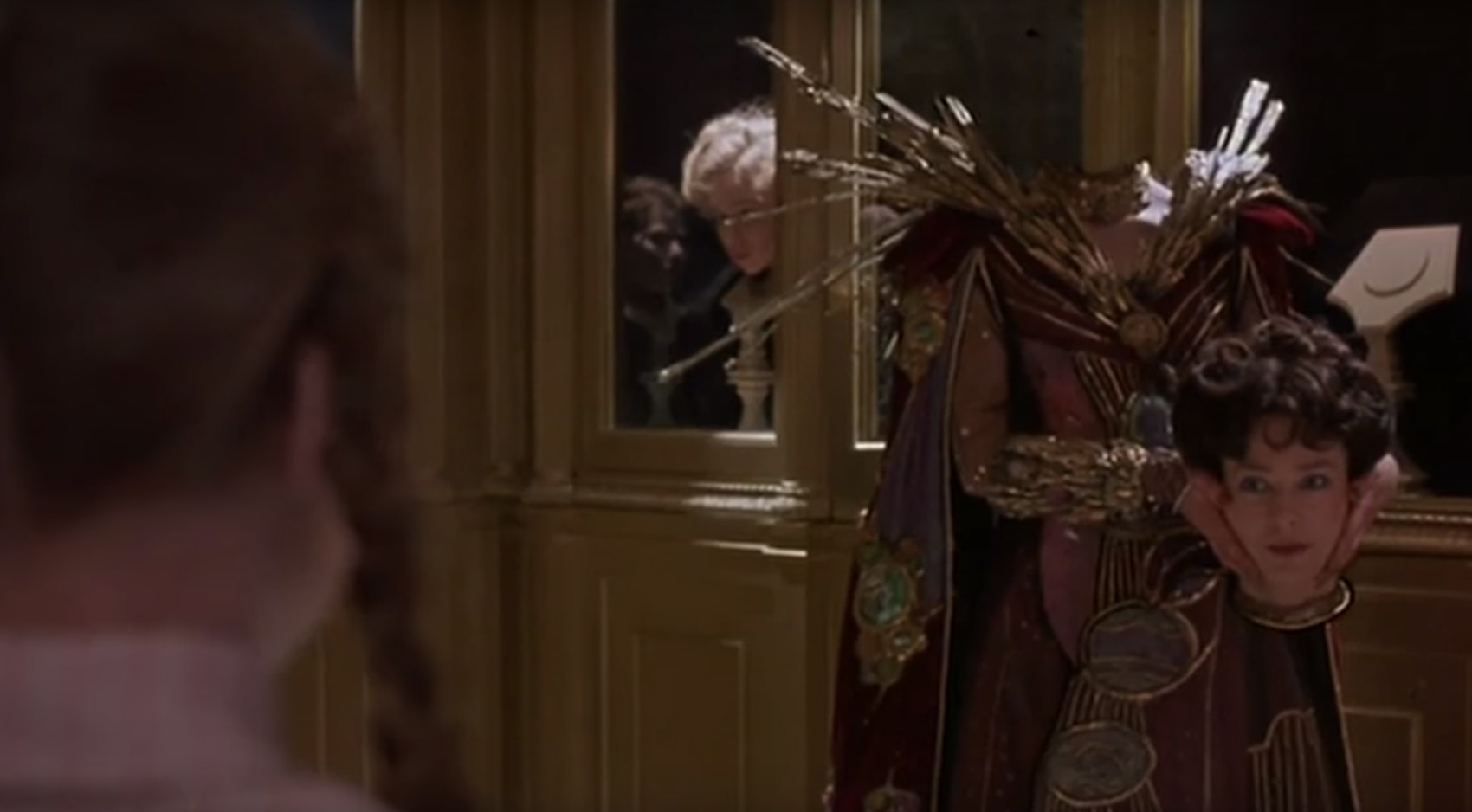
Dorothy, Billina, and Tik-Tok go outside where he beats up the Wheelers, easing the chaos in Dorothy’s mind. They then meet Mombi, the evil witch who serves the Nome King and now poses as the new ruler of Oz. Mombi has an ability to swap her head with those of other characters, namely women who have had their heads removed. 

Mombi symbolises Nurse Wilson, a cruel, sinister figure who abuses others, and is thus nasty towards Dorothy. The interchangeable heads and personalities symbolises Dorothy’s madness and loss of identity, Mombi threatening to remove Dorothy’s head to add it to her collection. Though sentient, the heads are only hosts for Mombi, and are truly hollow, symbolising the patients hurt by the ECT.


There are over thirty heads, with Mombi’s original head locked up in Cabinet #31, the same number of Dorothy’s room at the clinic. Interestingly, 31 is a number associated with “El”, another name for God. In Oz, Dorothy is considered an almighty figure of mythic properties, while Mombi is god in her domain, her true self hidden in Cabinet #31 with her source of power (the magical Powder of Life).

Mombi locks Dorothy and Billina up in the attic of the royal palace to eventually take Dorothy’s head. Tik-Tok’s action key ran down, immobilising him and Dorothy’s sense of self-preservation. It is here that we meet Jack Pumpkinhead, a Scarecrow-like character, who is childlike, innocent, naive, and quite dependent on others. He was created by Ozma and is her son, later referring to Dorothy as his mother til he finds his real one.


Jack represents Dorothy’s innocence and childhood but also her vulnerabilities. He also serves as a substitute for her conscience (Ozma) til she is found. He may also represent the Id of Dorothy’s mind, driven by simplicity and a need to feel things. However, this is debatable, since he later claims he won’t miss such sensual things before undertaking the Nome King’s game of doom.

Dorothy comes up with an idea to escape Mombi, fixing Tik-Tok, before going to retrieve the Powder of Life. This part is the darkest and scariest part of the film, with Dorothy awakening the real Mombi, who rages and screams hysterically, wanting Dorothy dead. She represents Dorothy’s lingering madness, causing Tik-Tok’s brains to run down. Dorothy gets lost whilst running away, but Ozma’s image shows her the right way. Dorothy and Jack bring the Gump to life, a mismatched creature made from furniture and a moose-like head, showing that Dorothy’s imagination and creativity still exists.

The Gump himself is a rather snarky, honest, and gloomy character, representing Dorothy’s rationale but also her sense of mortality, since he has already died once and been reborn. Mombi leaps into the room but our heroes escape the castle and fly across the Deadly Desert. We learn Ozma was trapped in a mirror by Mombi, who claims no one remembers her or her true lineage as Queen of Oz. Dorothy has misplaced her conscience and need to return home.


The Wheelers give chase to the Gump but several fall into the Deadly Desert and die, pretty much symbolising their end as a threat to Dorothy’s subconscious. However, without her conscience (Ozma) and wisdom (Scarecrow), Dorothy’s mind is starting to fracture, as seen when the Gump falls apart midair and the gang crash land on the Nome King’s mountain without dying. The group rebuild the Gump, symbolising Dorothy beginning to rebuild her mind.

The Nome King appears to Dorothy and friends, dragging them down into his throne room where he reveals the Emerald City was created from stolen gems and blames the Scarecrow. The Emerald City was the centre of Dorothy’s subconscious until destroyed by the Nome King, his mountain now the source of power and influence within, stealing the emeralds and Dorothy’s wisdom/common sense. The emerald itself is associated with love, hope, wisdom, and appropriately, a healer for a troubled mind. The Nome King took the emeralds to crush all of these elements of Dorothy’s psyche.
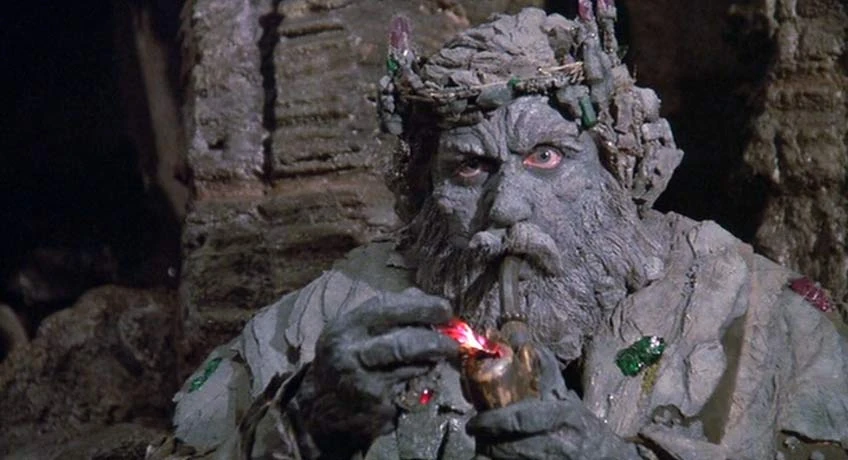

The Nome King challenges Dorothy and friends to a rather cruel game - he has changed the Scarecrow into an ornament and hidden him in a vast chamber of antiques. Each character (save the hidden, unseen Billina, whose eggs can kill Nomes) has three guesses to identify the Scarecrow and he will be freed if they guess correctly. However, if they lose, they will become an ornament too. Such a fate represents the damage done to the patients and further destruction of the mind.


The Gump goes first but quickly loses, possibly due to his weakened sense of judgement. Jack also fails, due to his Id-based lack of thinking, as described by Tik-Tok, claiming Jack has many excellent qualities but “thinking isn’t one of them”. Dorothy agrees, beginning to doubt her ability to win, leading to her friends’ defeat. During this, the Nome King is becoming more and more human, having begun as a face on a wall, symbolising his growing influence over Dorothy.

Tik-Tok goes in next to guess, leaving Dorothy to talk with the Nome King. He questions her reasoning to come back to Oz, thus putting her dreams and mindset into doubt (“You came all this way for a scarecrow?”). However, the Nome King then reveals his power has come from the noneother than the Ruby Slippers, which he now wears, claiming they fell out of the sky, discarded by Dorothy to go home.


The slippers represents Dorothy’s link to reality and is now under the Nome King’s control. The power over her own mindscape, which the King has exploited and now rules. Dorothy is clearly shaken by this, but now realises what she has done by not making her mind up.

The Nome King is informed that Tik-Tok has run down, sending Dorothy in to fix him and then guess herself. However, he then reveals a newer agenda - offering to use the Ruby Slippers to send Dorothy home and forget Oz forever. His influence over Dorothy’s mind is at its peak, controlling her one link to reality, but it would mean she would be unable to recover. Dorothy marches away into the collection room, finding Tik-Tok has faked his movement to get her in so she can see what he transforms into.

Tik-Tok admits he is having trouble thinking, not out of a lack of thought but because he is sad, crying emerald-green tears. He has thus taken on a new role, representing Dorothy’s humanity. He has also made the emotional choice to sacrifice himself to help Dorothy win. However, the game is not so fair, and Tik-Tok disappears. Mombi arrives to a gloating Nome King, admitting he could have transformed all of the heroes immediately but set up the game out of amusement. He now has near-complete control over Dorothy’s mind and is now just playing with it.

However, when Mombi suggests the possibility that Dorothy guesses right and learns about Ozma, the Nome King’s confidence is shaken for the first time. He knows her true identity and purpose, knowing the return of Dorothy’s conscience could take away his control over her. Meanwhile, Dorothy resorts to pure chance to guess. She stumbles around with her eyes shut until she notices an emerald on a shelf. And as the emerald symbolises hope, Dorothy frees the Scarecrow, reuniting with her wisdom. Immediately, Dorothy guesses Ozians transform into green ornaments, restoring Jack and the Gump.


The Nome King rages, his power now reversing. He imprisons Mombi for failing him and transforms into a giant rock monster to devour Dorothy and her friends. Declaring he is tired of games and Dorothy’s defiance, he proceeds to just consume her mind by force rather than slow influence.

However, when he tries to eat Jack, Billina lays her egg in fright, which falls into the Nome King’s mouth, poisoning him. The egg represents birth, symbolising Dorothy taking control over her mind again. Eggs turn out to be lethal to Nomes, and the Nome King slowly crumbles and dies in horrific fashion, ending his influence over Dorothy. She then uses the Ruby Slippers to transport everyone to Oz (including Mombi) and restore the Emerald City to life, effectively healing her mind.


The gang briefly assume Tik-Tok is dead but the Gump discovers a medal hanging from his antler, actually Tik-Tok, representing Dorothy’s victory, and free him. Some time later, Dorothy and friends celebrate in the royal palace alongside the Tin Man and the Cowardly Lion. Mombi has been caged, and even the Wheelers are joining in the festivities, now a positive part of her mind. Dorothy has one last choice to make - to remain in her fantasies or return to reality, despite her friends’ pleas for her to become queen.

However, Jack exclaims that they understand Dorothy’s decision, fulfilling his role as her substitute conscience. Dorothy wishes to be in both places at once, the slippers granting her desire by summoning Ozma in the mirror. Dorothy reunites with her conscience and pulls Ozma out of the mirror. Several women explain Ozma’s role as queen, and it is revealed Dorothy stripped Mombi of her magic, removing Nurse Wilson's influence too.


Dorothy surrenders the slippers to Ozma, who promises to visit Dorothy from time to time with the offer to let her visit Oz. This is basically Dorothy’s conscience to balance or limit her time in her fantasy world but leaves the door open to return. Dorothy is then abruptly sent packing by Ozma, likely her own mind preventing her from hesitating in her decision. She awakens on the riverbank, clearly saddened by the outcome but knows it is for the best. Toto, Uncle Henry and Aunt Em appear moments later, serving as Dorothy’s reward for overcoming her problems.

It is revealed Dr. Worley died when a fire broke out in the clinic, trying to protect his machines, ultimately symbolising his choice to preserve his power than his life and profession. A police cart passes by, showing Nurse Wilson inside, the same as Mombi’s punishment. In a final scene, Dorothy’s farmhouse has been completed, Henry is recovering, and Dorothy is now a healthier, happier person. Ozma and Billina appear to her in her mirror, but when Dorothy goes to summon Aunt Em to show her, Ozma hints at her not too, reminding her own her decision to remain firmly within reality.

Dorothy realises she cannot dwell in her fantasies as they leave her detached from the real world. Thus, she surrenders the Ruby Slippers over to Ozma, allowing her alter ego to rule and tow the line, so she can return home a better person.

And there you have it! Just one fan’s take on the symbolism of the film. By no means am I an expert on symbolism, philosophy, or that sort of thing, but I do like to analyse films and find a deeper meaning to them, particularly films that make you think, theorise, and examine them more closely.
Tuesday, 30 October 2018

The Grudge: A Retrospective


Well, we have done a retrospective on The Ring franchise, so it makes sense to do the same to its sisterly series: The Grudge. Better known as Ju-On in Japan, the series was created by Takashi Shimizu, who made a bone-chilling premise. I caught the American remake on television and it scared the hell out of me, giving me nightmares for a long time. Both The Ring and The Grudge are both creepy, unsettling experiences that thrive in unnerving the audience.


Ju-On revolves around a cursed haunted house in suburban Tokyo, where a family were murdered through violent means, and their ghosts return as unstoppable, vengeful, and very angry, restless spirits. The housewife Kayako Saeki had an obsessive crush on her son’s teacher. Her husband Takeo found out, went berserk, and broke her neck. Depending on the often confusing continuity, he may have also killed their son Toshio, and his pet cat too. Anyone who steps into the house is doomed, and will eventually be consumed by the curse, or even becoming a part of it. Kayako’s signature, disturbing, croaky death rattle, and Toshio’s meowing taunts have cemented their place in my mind.

Each film is told through a series of vignettes focusing on different characters, though often in a disorganized, non-linear fashion, so each film jumps around a lot in its own timeline. Each film, at least in the Japanese series, connect to one another through minor scenes or background events. The franchise consists of two short films, two TV movies, two cinematic releases, two back-to-back spin-offs, a reboot and sequel, an American trilogy, and a crossover with The Ring. But, remarkably, it feels like the same film has been remade over and over again. The same things often happen, and it can make The Grudge a little tiring if you intend on watching the whole franchise.

Ju-On: The Curse


The first “V-Cinema” television film released in 1998 by Takashi Shimizu, Ju-On: The Curse was preceded by two short films – “Katasumi” and “44444444”, which both tie-in to the film. Why on earth they didn’t just insert them into the film is beyond me? It revolves around the cursed Saeki house, and those who encounter it – as does every other film that follows.

The main plot focuses on Toshio’s teacher Kobayashi visiting the home, unaware that the Saeki family are all dead, and his student is a freaky, meowing ghost. This sequence has a lot of creepy moments, and eagle eyed viewers can spot some really creepy things in the background and wide shots. Kobayashi discovers Kayako’s body in the attic, and then receives a rather disturbing phone call from her jealous husband Takeo (Takashi Matsuyama), revealing he has murdered Kobayashi’s pregnant wife. Then, Kayako (Takako Fuji) emerges from the attic and slowly crawls down the stairs. Having a broken neck and ankles, she can only groan and crawl around the franchise, and in an increasingly hair-raising manner. Though, it doesn’t stop her from uttering her lone line of dialogue in the whole film, still enamoured with the teacher. And during all this, Toshio is meowing down the phone. We also see Kayako’s ghost then come for her murderous husband.

This whole sequence is severely unsettling, and perhaps the scariest that this franchise gets in terms of atmosphere. The performances by Fuji, Matsuyama, and Toshio’s actor Ryota Koyama are all fantastic and extremely frightening. Kayako’s marionette movements and death rattle, Toshio’s meowing, and Takeo’s dark breathing are creepy as hell. The trio, or at least Takako Fuji and Takashi Matsuyama, would play the roles throughout the Japanese series and then in the American remakes.

The remainder of the film focuses on the family who moved into the house after the Saekis died. Sadly, there isn’t much character growth in the film (or the series), and most characters are just canon fodder to be killed. One character has a phobia of cats, which doesn’t help when her friend has tons of cat toys that stare at her, hinting at the larger supernatural presence in the house. As we shall see, Kayako and co. can do just about whatever they want with reality in their house.

Another great moment is when one character disappears offscreen and returns as a shuffling zombie missing her bottom jaw, though the special effects are naff. Chiaki Kuriyama, best known from Battle Royale and Kill Bill, appears in a supporting role. The film doesn’t really have a final act, but rather a set up for the sequel, involving a pair of sibling estate agents plotting to sell the Saeki house to a new family. The sister, being psychic, a common occurrence in Japanese films, senses something is wrong with the house. But, her brother has already sold the house. The film has a memorable score by Geirî Ashiya, and the use of minimalistic scares works well.


Ju-On: The Curse 2


After the first film, its sequel is a half-film, since a majority of its footage is recycled from the original, specifically Kobayashi’s vignette, and the last fifteen minutes, which set up this film’s plot. The estate agent siblings, Tatsuya and Kyoko, sell the Saeki house, but soon face its influence. It turns out Tatsuya and his son Nobuyuki live in Kobayashi’s old apartment. Nobuyuki and Kyoko are left traumatised and clearly haunted after encountering a re-enactment of Takeo murdering Kobayashi’s wife. Tatsuya takes them to his parents’ house, but things go very wrong. This plot wraps up halfway through, and the last twenty-five minutes or so go through a series of increasingly silly scares to kill off the remaining cast of the first film. One thing of importance is established about the curse – it spreads like an infection. If a person goes into the house, but dies elsewhere, that location becomes infected with the curse.


Ju-On: The Grudge

The first cinematic release, Ju-On: The Grudge is commonly mistook for the first film in the series. Our main heroine or victim is Rika, a care worker who is assigned to care for an elderly woman living in the infamous house. She hears meowing behind a taped up closet door, and finds Toshio trapped inside. It has a great build up of tension. Rika then drops out of the story for, well, years. She doesn’t return til the third act, set years later, and is drawn suddenly back into the spider web and suffers a terrible fate. Yes, not only does the curse influence space, but also time.

In another subplot, a traumatised police officer Toyama has to confront his demons, his colleagues consumed by the curse. There is a terrifying moment where he watches security footage, and witnesses Kayako’s spectre lurch towards the camera, vanish, and then suddenly appear right in front of it with her eyes staring directly at him. Whilst trying to burn down the house, Toyama is flung forward in time and encounters a high school girl who regards him with familiarity. Toyama then dies offscreen, and this girl turns out to be his daughter, Izumi, who was introduced as child. Izumi is certainly one of the more tragic victims of the curse, tormented by the phantoms of friends she abandoned in the house after a dare went wrong.

I’d say the most eerie part of the film is the very end, showing desolate streets of Tokyo with tons of missing persons posters covering every wall and lamppost, implying the curse has spread far and wide.

Ju-On: The Grudge 2

The fourth installment can easily be considered the finale of the original series. While it has the usual tentpoles of the franchise, it has the most fascinating goals of the franchise. The film focuses on an actress named Kyoko who is caught in a car crash staged by Toshio, suffers a miscarriage, and her husband is left comatose. But, then Toshio appears to her in hospital, touching her stomach, and Kyoko ends up pregnant. We learn through the vignettes that Kyoko was involved in filming a TV show in the Saeki house, now a local legend. The other crew members get their own plotlines along the way, though it is mostly to be killed through creative means.

Kayako becomes particularly violent and unforgiving, murdering characters without mercy. The crew’s screenwriter is hung through an elaborate, time-displacing sequence, and the make up artist is, well, attacked by a wig that transforms into Kayako. Any sense of sympathy for Kayako and Toshio is gone, as they are depicted as malicious banshees, and Kayako is at her most frightening, now a lurching, bloodstained contortionist. The curse’s ability to play with time becomes even more absurd, with Toshio, still alive, steps out of the past into the present to interact with Kyoko. There’s a rather pointless subplot involving one of Izumi’s surviving friends, who is dragged through time by the curse, and then randomly dies.

The film’s ending is pretty amazing. Kyoko comes across Kayako’s personal diary and suddenly falls into labour. She is rushed into hospital, and gives birth to a reborn Kayako. This may have been the ghosts’ plan the whole time. Cut to several years later, the now toddler Kayako pushes Kyoko off a bridge for no reason, and departs into the unknown with her diary in hand. And this is, chronologically, the last time we see the character, leaving a lot of unanswered questions about the curse and timeline of the films. What about that apocalyptic ending of the last film? This by far the best of the Ju-On films, and if Takashi Shimizu intended on this to be the last hurrah, it was a wonderfully bleak film to end with.


The American Trilogy

Chronologically, the American trilogy was released next. The Grudge is basically a direct remake and fusion of the first and third Japanese films. Sarah Michelle Gellar fulfils Rika’s role, but sadly never whips out a vampire stake at any point to fight the ghosts. Takako Fuji and Takashi Matsuyama returned for the remakes, and are now even more terrifying as Kayako and Takeo. Being an American remake, a few familiar actors show up. Bill Pullman appears as Toshio’s teacher, and Ted Raimi appears in a supporting role. Japanese horror veteran Ryo Ishibashi (of Audition fame) appears as Detective Nakagawa. Originally, The Grudge was going to be a standalone film with a relatively happy ending, with the ghosts allowed to move on and find peace, but the ending was changed to make sequels.

The Grudge 2 takes elements from Ju-On: The Grudge 2, but does some original things to, unnecessarily trying to explain certain parts of the mythology. There are three stories: Amber Tamblyn (who had also appeared in The Ring) plays Sarah Michelle Gellar’s sister, who goes to Japan to retrieve her sister, but she is killed by Kayako; three high school students go into the house and you can guess what happens; and far away in Chicago, a family move into a tower block and find the neighbours are a little creepy. The three subplots all connect together, with a couple of surprises about who, what, and when take place.

The most interesting part is when Amber Tamblyn tracks down Kayako’s mother, a spirit medium who force fed a young Kayako bad spirits, mostly an excuse to explain why she is such a frightening ghost. Kayako then appears and kills her mother in what feels like one of the few personal kills in the film. I do particularly like the plot twist in the third act, and it opens up a whole new can of worms with the curse going international. Sadly, this was the last time Takako Fuji plays Kayako; like Boris Karloff, she worried her iconic role would turn stale, and bowed out from the role. Takashi Shimizu also stopped directing the films after this. Too bad the producers didn’t do the same.

The Grudge 3 is just pants. Kayako seems to have ditched the psychological, crawling-under-your-skin scares and just relies on American clichés and gore to kill people. Kayako’s sister Naoko, heads to Chicago to exorcise her sister from the tower block. Tenants of the building, specifically three siblings, Lisa, Max, and Rose, become involved in Naoko’s task. Toshio is played by Shimba Tsuchiya, making the young boy appear slightly older. Despite an engaging finale and interesting ideas, it is a poor end to the American trilogy, lacking Shimizu’s sense of chills and thrills, and relies on jumpscares and gore to frighten the audience.


White Ghost & Black Ghost

To celebrate the tenth anniversary of Ju-On, two back-to-back spin-off films were released: White Ghost & Black Ghost. Aside from cameos by Toshio, these films are disassociated with the main characters and completely original. I do like this idea and exploring that possibility of there being more than one “grudge” in Tokyo. The Halloween series attempted this, but it backfired, since audiences were accustomed to Michael Myers. Both films are only an hour long and vaguely connected if you pay close attention.

White Ghost is closer in tone to the main series, involving another haunted house and a ghostly family. A teenager, Akane, mourns the death of her childhood friend Mirai, feeling guilt for not protecting her from her abusive uncle. After performing an Ouija game, Mirai’s ghost appears and haunts Akane. The film is told in a non-linear fashion as always, but has a few pointless subplots. Mirai’s ghost appeared to murder Akane’s father on Christmas Eve, but acts innocent and as a victim throughout the film. The film clumsily handles moments that are meant to be serious, but feel silly. What should feel like a serious movie, comes off as unintentionally hilarious.

Black Ghost is the better of the two, and has a far more original story. It is about a hospitalised girl, Fukie Yotoka, who shows signs of possession. Her mother and aunt discover Fukie’s body is shared with a cyst – the remains of an absorbed twin, which wants its own life. What a fantastic idea. It takes a couple of viewings to understand the plot, but it is a good one. The film has a rather tragic ending, and dramatic consequences for well-intentioned people. There is a minor tie-in to White Ghost, both involving the same house, so Black Ghost actually takes place before the other film. I would love to see more original Ju-On films, but sadly, the next film was yet another remake.


Ju-On: The Beginning of the End

A pointless remake with a pointless title. A remake and reboot of the original films, recycling plot elements and offers little original content. A teacher, this time a woman, goes to the Saeki house to find out why Toshio isn’t coming to school, while a group of school girls dare each other to go into the haunted house. As you might expect, the ghosts soon start to stalk and kill the characters. Rinse and repeat. Toshio gets a strange new origin story. He is a body-jumping ghost of a dead child, reborn anew as Toshio, only to then die again and become a ghost again. He’s stuck in this weird loop.

The titular grudge comes on a whim, when Kayako randomly tells Takeo that Toshio isn’t his child (technically he is, but he’s also the spirit of an already dead child). Takeo starts mugging at the camera, goes nuts, and murders his wife, and nukes the family cat in the microwave. What a creep! One thing of interest is that we see Kayako’s transformation into her iconic phantom appearance. A lot of the film is taken from the others – the broken jaw, the spooky diary, etc. There is a lot of silly moments in the films. Cardboard boxes shudder and jump around “menacingly”, one girl is dragged to her doom into a fridge (does Toshio know Zuul?), and then there’s the subway scare scene.

One character, Nanami, encounters the ghosts of her dead friends on the train. One is missing her lower jaw, and Nanami’s reaction isn’t exactly one of fright. She then turns around, and finds another friend has become a giant for some reason, and this causes her to scream in terror. Even the traditional “Kayako comes down the stairs” scenes gets mishandled. The camera hovers on the stairs, the music rises in anticipation, only for the camera to then swing to the right, revealing Kayako is upside-down on the ceiling. This whole film is a waste of time and not worth the watch. 


Ju-On: The Final Curse
 

The quote-on-quote final film of the Ju-On franchise (if Sadako vs. Kayako doesn’t count), Ju-On: The Final Curse is a sequel to the previous film, and is a little better. The teacher from the last film disappeared, and her sister becomes the main character. But her storyline is boring and treads through familiar water. What is really interesting is the other subplot, where Toshio (who can leave his mortal body) moves in with his cousin Reo and her mother. Toshio is still creepy as hell, but it does humanise him a little. Sadly, he brings the curse and his mother’s ghost with him, so his family meet unfortunate fates.


There’s a lovely scene where Toshio visits a terminally ill girl in hospital after she spots his ghost from afar. Rather than kill her, Toshio has a conversation with her, even letting her pet his cat (who somehow went from ginger to black). She states she’ll die soon, and offers to keep him company in the afterlife. This turns out to be a double-edged deal, since Toshio possesses her body and then dumps it aside, revealing the curse continues through him, and he can control bodies like puppets for some reason. The Final Curse isn’t a bad film, but focuses on the wrong story.

I feel that the Saeki family have run their course. White Ghost and Black Ghost found the right track, and if this franchise was to continue, it should follow a similar path by telling original stories. You can only make the same movie so many times.


Happy Halloween!

Monday, 22 October 2018

The Ring: A Retrospective


The Ring franchise is considered a founding factor in the interest in Japanese horror in the west, or rather, creating a string of mostly unnecessary remakes. Based on a series of novels written by Koji Suzuki (also author of Dark Water), the story of a spooky cursed videotape that kills anyone after seven days, has captured or rather terrorised the imagination of readers and viewers alike. Though the first book was a mystery horror, the sequels, Spiral and Loop, were a medical mystery, and a science fiction respectively. All have engaging stories and fantastic plot twists that explore the sinister virus that originates from the videotape, rather than a haunting curse as depicted in the movies.


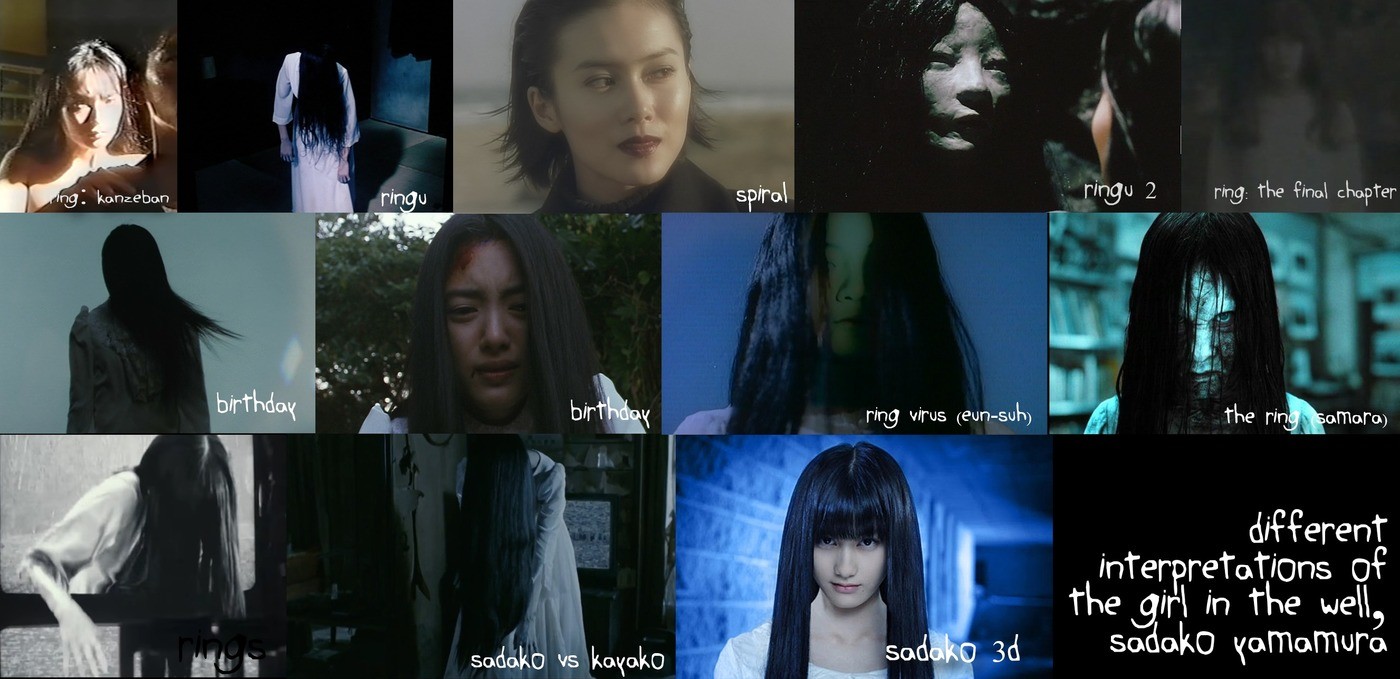
 The franchise reflects modern fears of society, including a fear of technology, urban legends, illnesses, unexpected pregnancy, and fear of the unknown. The main antagonist, Sadako Yamamura (aka Samara Morgan, aka Park Eun-Suh), has earned her spot in popular culture, taking inspiration from Japanese folklore and mythology. The Ring remains my favourite horror franchise, and just about the only one where I’ve read and watched every major piece of media related to it. For this, I’ll be giving mini-reviews of each film and TV serial based on the books, with obvious spoilers ahead.
Ring: Kanzenban (1995)


Ring: Kanzenban was the first attempt to adapt Ring as a TV serial, but is a poor attempt with signs of a lack of a budget. Though a close adaptation of the book, it does take bizarre liberties, and has a strange focus on being everything but a horror story. Kazuyuki Asakawa (Katsunori Takahashi), a journalist, investigates the mysterious death of niece, discovering the existence of a cursed videotape, which he watches, and learns he has seven days to live. He teams up with his friend Ryuji Takayama (Yoshio Harada), Asakawa investigates the tape’s origins, leading him to the psychic Sadako Yamamura (Ayane Miura), thrown down a well long ago. Aside from the incredibly poor quality, the TV series decides to throw in some more adult content at the expense of telling a decent mystery.


Ring: The Final Chapter (1999)

Yes, this did come out a year after the 1998 Japanese movie, but it made sense to review it before getting to the movies. Ring: The Final Chapter is one of two TV series adapting the books, with a few liberties, and inspiration from the film. Not a clue why it is called “The Final Chapter” since this is one of many chapters in The Ring’s chronicles. It follows the story of the novel and film, though the cursed videotape is reimagined as a recording of a pop idol’s music video, extending the countdown to death to roughly two weeks. Asakawa (Toshiro Yanagiba) is a lot more likeable now compared to Kanzenban’s whiny version. The series meanders quite a lot, drags its feet, and Tomoya Nagase as the weirdest portrayal of Ryuji Takayama yet. Had a limited budget, feels a little sluggish, and has pacing issues, but is a good show altogether.


Rasen: The Series (1999)

The sequel to The Final Chapter, Rasen is based on the second novel Spiral. Like the first season, it takes a lot of liberties with the story. Rasen involves a teacher, Mitsuo Ando, a bereaved father, investigating the cursed videotape (now on CD!), and the biological mysteries of Sadako’s genes, that can create clones of the dead. Okay, it’s a bit more complicated than that, but that is the short version. It gives the characters some great moments of jeopardy, and hard choices to make between their loved ones and the world. By far, the best part of the series in the King of Terror subplot, a murder-mystery terrorism plot involving a sinister figure manipulating characters behind the scenes. It is fun trying to guess who this character actually is, and their origins are even more terrifying than those of Sadako Yamamura.


Ring (1998)


The synonymous Japanese horror film, Ring propelled western interest in Asian horror, leading to a string of remakes. The film was directed by Hideo Nakata, who also directed the sequel, the American sequel, and the brilliant Dark Water. Perhaps the greatest element of the movie is its chilling atmosphere and frights, projecting a constant sense of dread throughout. This sort of scare makes for a much better horror film than cheap jump scares. There is an obvious budget, but the use of special effects works fine for the time. Negative shots are used to symbolise death, etc. My one complaint is that the DVD copy I have is ridiculously dark and grainy in some places, particularly in the night scenes, making it hard to tell what's going on.


Asakawa is reimagined as a woman, Reiko Asakawa (Nanako Matsushima), a workaholic journalist. She has a young psychic son named Yoichi, and Ryuji Takayama (Hiroyuki Sanada) is her ex-husband. The film’s plot takes a lot of liberties with the novel, rewriting Sadako’s backstory too. As a child, she murdered a journalist, her mother went nuts and committed suicide by throwing herself into a volcano, and Sadako is eventually thrown down a well by her father Dr. Ikuma. The film has heavy themes of parental neglect, responsibility, and examines the climate of Japanese society at the time.


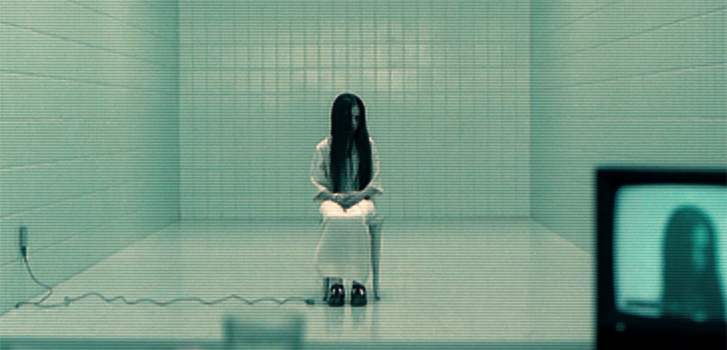
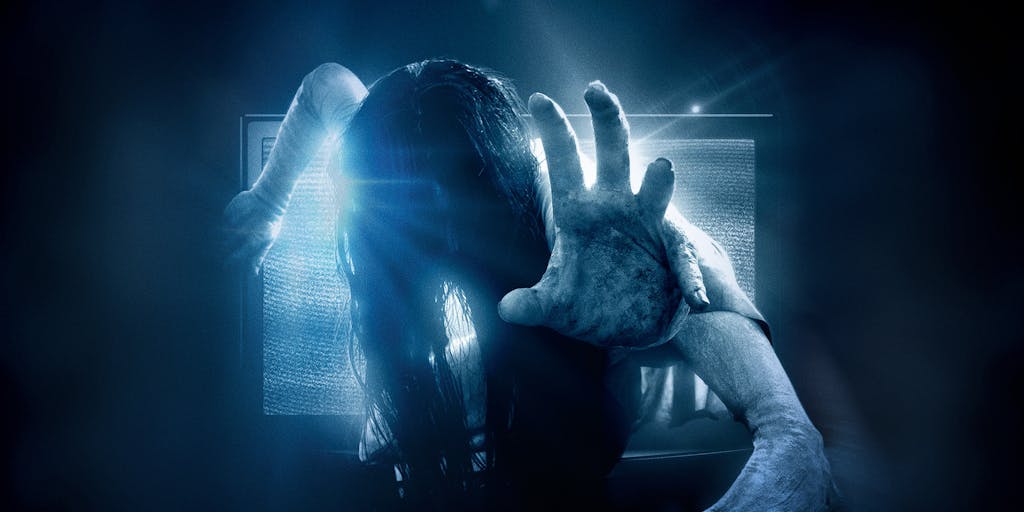
The film has a lot of chills. It is implied that the ghosts of Sadako’s victims become her slaves. The cursed videotape itself feels alien in tone, with abnormal visuals and sounds. Of course, the highlight is Sadako emerging from the television. She was played by kabuki actress Rie Ino, whose creepy movements were then played backgrounds to give Sadako an inhuman quality about her. The score was composed by Kenji Kawai, who also did the score for Ghost in the Shell. Ring is a fantastic film, and in my opinion, one of the best horror films made. The film gained a prequel, and two sequels, though the first of which was retconned.


Rasen (1998)

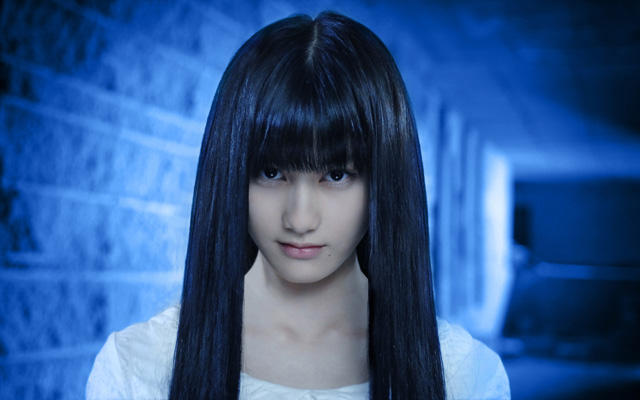
Not many people are aware of this film. It was originally the direct sequel to Ring, released mere weeks after the original in order to keep public interest in the franchise. Only problem was no one went to see it, or knew it was in cinemas. It is a close adaptation of the book Spiral, abandoning the more supernatural elements in favour of a medical mystery. Lacking scares and naff quality, Rasen revealed the cursed videotape contains a mutated virus which can cause heart failure, but also can cause a fast-paced mystical pregnancy in women if they conceive during their cursing. Sadako, played wonderfully by Saeki Hinako, is back from the dead and offers the hero, Mitsuo Ando, the chance to resurrect his dead son, but at the cost of spreading the videotape across the world. Though it has some interesting ideas, the film’s quality and completely differentiation from Ring made it unpopular. It was subsequently retconned and a new film, directed by Hideo Nakata, was made: Ring 2.


Ring 2 (1999)


The new sequel to Ring, Ring 2 is better than Rasen but does have its own share of problems. There is a lot going on in the film, bringing back the whole cast of the original, and takes place two weeks after. Ryuji Takayama is dead, Asakawa and Yoichi are missing, and her elderly father has died after watching the tape. Mai Takano (Miki Nakatani), Ryuji’s student, searches for answers to his death, tracking down Asakawa and Yoichi, who has become mute and his powers are influenced by Sadako’s power. There are a lot of subplots in the film – a mad scientist hopes to master psychic energy; Sadako’s uncle has to collect her body (revealing Sadako was actually alive in the well for thirty years!); and a journalist named Okazaki dooms both himself and a teenager when he begins researching the cursed videotape and makes cowardly moves to save his own skin. The finale is certainly a weird one, but ends with a briefly touching moment where Sadako confronts the heroes as they escape the well, and gives in to her fate as being trapped forever. Ring 2 has a lot of problems, particularly with pacing, isn’t very scary aside from a couple of scenes, and deflates once the whole “Exorcist but with psychic energy and a swimming pool” subplot takes centre stage.


Ring 0 (2000)

A prequel to the first film, Ring 0 is based on the short story “The Birthday”, detailing Sadako’s time in a theatre troupe and even fell in love with a young man named Hiroshi Toyama. Ring 0 is effectively a Japanese remake of Carrie – a socially ostracized girl has immense psychic powers, finds love, something goes wrong, and she kills everybody. Though, I actually like this film more than Carrie. Sadako Yamamura is the protagonist of the film, played wonderfully by Yukie Nakama, a shy introvert who hides her shady past and just wants to be an actress. She falls in love with Toyama, the sound operator, and their romance is rather sweet. Things go to hell in the third act, involving a vengeful journalist orchestrating Sadako’s murder, but she is revived when it turns out she has an evil twin living with her father. In a wild plot twist, turns out Sadako split into two identical twins, one good and one evil, the latter tormenting the good Sadako for years. The film then goes from absolutely terrifying to tearjerking towards the end, as you know, Sadako is inevitably going to be thrown down a well and become the vengeful ghost we know and fear.


The Ring Virus (1999)

The Japanese film was such a success that South Korea decided to remake it a year after it came out. The Ring Virus is unfortunately a total dullfest. It directs the novel a little closer, mixing various elements from virtually all the past adaptations of the book, including the dodgy incest stuff from Kanzenban. The Korean version of Reiko Asakawa is emotionless and rigid, and her actress never comes off as having any interest in giving a good performance. Even when she watches the videotape, she looks bored, and somehow even makes throwing up in a toilet looked staged. Even the scene where Sadako (or Park Eun-Suh) emerges from a TV is rubbish. Why did the cinematographer think having a bright room would be a menacing setting for the iconic shot of the movie? Awful stuff.


The Ring (2002)


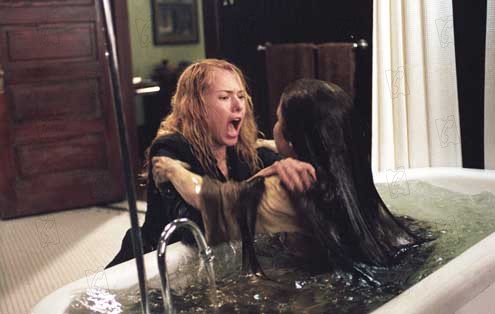
And now onto the other main event. The American remake of Ring is probably better known than the Japanese film, and in some ways, is better, or at least in quality. Directed by Gore Verbinski and produced by Jerry Bruckheimer, The Ring is a mostly superb adaptation, with a chilling atmosphere, likeable characters, and aside from a couple of jumpscares, has some great spooky moments. Naomi Watts carries most of the film as Rachel Keller (i.e. Asakawa), following the basic plot of the cursed videotape, etc. She has a strangely creepy son named Aidan (David Dorfman), who reminds me of Haley Joel Osment’s character in The Sixth Sense. This kid even finds out the important plot details later and decides NOT to inform his mother of these dreadful twists until its too late.


The cursed videotape is like something from David Lynch or David Cronenberg. Sadako is reworked as Samara Morgan (Daveigh Chase), a delightfully creepy little girl who “never sleeps”, and has uncontrolled psychic powers that drove her foster parents crazy, murdering all their prize-winning horses after she was locked in the barn. The film rather cleverly sets up Samara as an innocent victim with powers she has no control over. But, then in the final scenes, it is implied Samara is actually a total sociopath, manipulating Rachel and the audience all along. The sombre violin-based score by Hans Zimmer is great, and the film is forever shot in this slightly blue tint, like a dated videotape. The film also pays homages to Alfred Hitchcock throughout the film. The film was followed by a short film tying the sequel to it, and then would gain another sequel in 2017.


Rings (2005 short film)


This decent short film is set between the first and second American movies, following a rather idiotic boy as he joins a cult that watches Samara’s videotape in turn and record what they experience. The short was directed by Jonathan Liebesman of all people, who’d direct the 2014 Teenage Mutant Ninja Turtles films. How did he go from this to that? The film does well to create a sense of mystery about the tape, studying the impact of trends and urban legends on the young. There are genuine frights in the film, it makes for a good psychological drama, with Samara at her scariest. Still, that moment when a character vomits up a giant CGI centipede takes you out of the movie.

The Ring Two (2005)

The Ring Two is a sequel that doesn’t know its own identity. Gore Verbinski was directing Pirates of the Caribbean, so Hideo Nakata was brought in to direct. The end result is a bit of a palaver, trying and failing to mix the western and eastern horror traditions together. Rachel and Aidan have moved to Oregon, but Samara somehow tracks them down with the intent on making Rachel her new mother by possessing Aidan's body. While the audience kinda figures out what’s going on, Rachel takes half the movie to. Samara breaks her own established rules in order to possess Aidan, and ends up attracting the attention of killer CGI deer. Yes, killer deer. Rachel eventually tracks down Samara’s biological mother, Evelyn, played by noneother than Sissy Spacek. The Carrie similarities have come full circle.


The attempt to blend western and eastern horror tropes just don’t work here. There’s a scene where the Samara-possessed Aidan murders a psychiatrist. But, it’s literally a two minute sequence where the characters are just sitting there, with the implication that Samara is filling the doctor’s mind with nightmarish imagery, leading her to kill herself. But, we don’t see it, and it feels really awkward to sit through. The film ends with Rachel temporarily drowning Aidan to exorcise Samara, and then is sucked through a TV into Samara’s monochromatic world. She escapes the well, pursued by Samara’s true freaky self, and Rachel traps her in the well again. The Ring Two is all over the place in terms of execution. I admire Nakata for trying to bring his signature aesthetic to the American films, but it sadly doesn’t work.

Sadako 3D (2012)


Twelve years after the last Ring film, Sadako Yamamura returned to her native country in a new 3D film that is weird to say the least, and not in a good way. In someway a soft reboot, Sadako 3D is a tacky and very silly film that felt like an excuse to just make a 3D film using an established franchise. The worst element is the titular 3D element, and constantly relies on Sadako crawling out of televisions to spook the audience. It’s like the filmmakers never watched the past movies, and only know the character from iconography alone.


It adapts one of Koji Suzuki’s newest novel “S”, focusing on a suicide video by Seiji Kashiwada (Yusuke Yamamoto), who plots to resurrect Sadako in a human host (i.e. whoever watches the video). Akane Ayukawa (Satomi Ishihara) is the designated target, having her own psychic powers. Akane and her boyfriend Takanori Ando (Koji Seto of Kamen Rider fame) flee a lot from Sadako, but she takes Takanori captive. Akane and cop Detective Nakamura team up to save him. The death scenes are hilariously bad. One character hangs himself, but his body is obviously a window shop dummy. The third act then completely jumps the shark, with Akane being chased by long-legged CGI grasshopper Sadako monsters. This film is nuts and a rubbish attempt to revive the dormant franchise. The one thing I’ll praise the film for is taking the logical route and putting Sadako on the internet. 

Sadako 2 (2014)


The sequel to Sadako 3D is slightly better, but still has a lot of problems. Akane falls pregnant and apparently dies, leaving her daughter Nagi in the care of Takanori’s sister Fuko. Nagi is a creepy girl to say the least, and it is quickly implied that she may be the reborn Sadako, murdering people. Fuko is dealing with her own trauma, having witnessed her mother’s suicide years ago, and isn’t very welcoming to death. The cursed videotape has evolved into pushing people into killing themselves, and Seiji Kashiwada has been arrested facing execution. A lot of the time, Sadako 2 has a melancholic mood, but manages to tell a relatively decent story. Unfortunately, there is a larger plot going on that is never really explained, too many unanswered questions that appear to be setting up unfulfilled sequels, and the film wastes too much time floundering around trying to figure out what to do.


Sadako vs. Kayako (2016)

A crossover between Ring and the Ju-On/The Grudge franchise. This has a lot of potential, bringing together Japan’s most scariest ghosts – Sadako and Kayako Saeko, but unfortunately wastes it. Though the film succeeds in capturing the sense of dread both prominent horror franchises have, the actual crossover event doesn’t happen until the last ten minutes. Two girls are separately cursed by the titular ghosts, eventually leading them to team up with an exorcist, who suggests being cursed twice and make Sadako and Kayako fight each other, to cancel out the curses. There are a couple of effective scenes, like when a bullied boy uses Kayako’s haunted house to get revenge on his tormentors. The fight itself between Sadako and Kayako is brief but pretty great fun, showing their conflicting powers. And the ending is equally bizarre but a set up for something awesome that we’ll probably never get to see.


Rings (2017)

The beleaguered third film in the American series, Rings, may have come a bit too late to be relevant, but it is a good film. Taking inspiration from the short film, Rings involves a young woman named Julia (Matilda Lutz) discovering her college boyfriend Holt (Alex Roe) is part of the cursed videotape cult, now reimagined as a social experiment orchestrated by Leonard off The Big Bang Theory. With Holt running out of time, Julia decides to watch Samara’s videotape herself and becomes cursed. But, her video experience is a little different from the others, viewing a new version of the tape, and gains a strange mark on her hand. It eventually becomes clear that Samara wants Julia and Holt to find and bury her mortal remains. Very continuity heavy, the film explores more of Samara’s backstory, with Vincent D’Onofrio appearing as Samara’s blind, evil, reverend father. Not exactly the backstory that I had expected, but it’s okay. The film takes a lot of visuals and influence from The Ring, using Hans Zimmer’s old score, and succeeds in making Samara scary again, even answering a couple of questions about Samara’s powers and restrictions that could be considered plot holes.